From Cheek Swab to Clear Next Steps
Four simple steps to personalized AMD risk assessment. No blood draw, no complex procedures — just clear answers.
Order Your Kit
Order online or through your eye care provider. Kits can be shipped directly to your home or collected at your provider's office.
Secure online ordering
HIPAA-compliant data handling
Ships within 1–2 business days

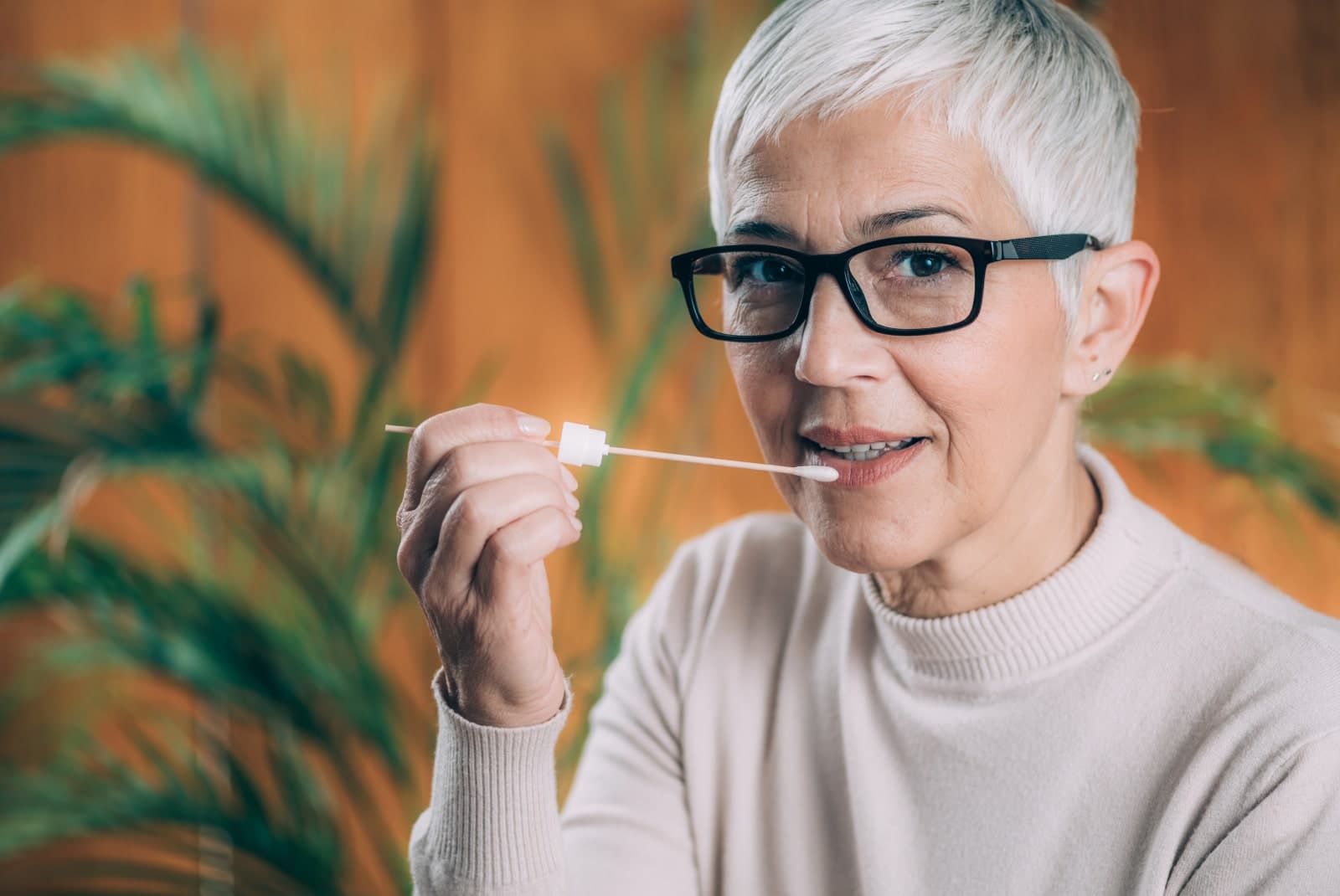
Collect Your Sample
A simple buccal (cheek) swab — painless and takes less than a minute. No blood draw, no needles, no fasting.
Painless cheek swab
Takes under 60 seconds
Can be done at home or in-office
Lab Analysis
Your sample is analyzed at our laboratory. We genotype 14 genetic markers across 12 genes including CFH, ARMS2, C3, and more.
14 genetic markers across 12 genes
Results delivered within 6–8 weeks

Get Your Report
Receive a comprehensive report with a clear summary of your genetic risk, personalized recommendations, and actionable next steps.
Clear risk summary
Personalized recommendations
Evidence-linked next steps

Everything You Need in One Report
10-Year Risk for Progression to CNV or GA
Genetic Risk Percentile
Patient's value: 36
Average Risk
Progression Risk to CNV or GA
18%
2-Year
31%
5-Year
53%
10-Year
Genetic Features
| Gene | SNP | Result | Risk |
|---|---|---|---|
| CFH | rs3766405 | CC | ** |
| CFH | rs412852 | CC | ** |
| ABCA1 | rs1883025 | CC | ** |
| APOE | rs7412 | CC | - |
| APOE | rs429358 | CT | * |
| ARMS2 | rs10490924 | GG | - |
| C2 | rs9332739 | GG | ** |
| C3 | rs2230199 | CC | - |
| CETP | rs3764261 | CC | - |
| CFB | rs541862 | AA | - |
| CFI | rs10033900 | CT | * |
| COL8A1 | rs13095226 | TT | - |
| LIPC | rs10468017 | CT | * |
| TIMP3 | rs9621532 | AA | ** |
Non-Genetic Features
| Risk Parameter | Value |
|---|---|
| AMD Status OD | Early AMD |
| AMD Status OS | Early AMD |
| Smoking | Quit |
| Education | High School or Greater |
| Height | 6' 2" |
| Weight | 220 |
| BMI | 28 |
Supplement Recommendation based on CFH and ARMS2 genotyping
AREDS without Zinc
Risk Categories Explained
Lowest Risk
Lowest risk of progression. Standard annual comprehensive exam with imaging as indicated.
Lowest risk tierModerate Risk
Moderate risk. Enhanced monitoring recommended. Semi-annual exams with OCT imaging.
Moderate risk tierHigh Risk
High risk of progression. Close monitoring with quarterly exams. Consider early intervention.
High risk tierHighest Risk
Highest risk. Intensive monitoring protocol. Frequent imaging and proactive management.
Highest risk tier